

Virtual Reality Events in 2026: Creating Experiences People Want to Step Into
Virtual reality events are becoming more focused in 2026, using immersive experiences to create stronger brand moments, practical demonstrations and memorable attendee engagement.
Virtual Reality Events in 2026: Creating Experiences People Want to Step Into
Events have always depended on attention. Whether it is a product launch, exhibition, conference, corporate gathering, festival or brand activation, organisers need to give people a reason to stop, participate and remember what they experienced. In a busy venue filled with screens, stands, speakers and competing conversations, this is not always easy.
Virtual reality is becoming a more practical part of event design because it can give attendees something that cannot be experienced through a brochure, standard display or presentation. A headset can take a person into a new environment, place them inside a product story, allow them to explore a location or give them a safe way to try an activity that would be impossible to recreate on the event floor.
In 2026, the strongest VR events are moving away from technology demonstrations with no clear purpose. Organisers are focusing on short, polished experiences that fit naturally into the wider event. The VR activity needs to support the message, match the audience and give attendees a reason to talk about it after they leave.
This is changing how brands, venues and event teams think about immersive technology. VR is no longer only an attraction placed in a corner of the room. When planned properly, it can become part of the visitor journey from the first invitation through to the follow-up conversation after the event.
Why VR Creates a Different Kind of Event Engagement
A standard event display asks people to look, listen or read. Virtual reality asks them to enter. This creates a different level of attention because the attendee is no longer only watching a story being told; they are actively experiencing it.
That experience can be especially powerful when a product, destination or service is difficult to explain in a physical venue. A property developer can take visitors through an unfinished building. A travel company can place people at a destination. A manufacturer can let attendees inspect a large machine or complex product without transporting it to the event. A training provider can demonstrate a realistic workplace scenario without creating risk.
The value does not come from the headset alone. It comes from choosing an experience that helps people understand something in a more direct way. When attendees can see scale, movement and context for themselves, the message becomes easier to remember.
Immersion Gives Attendees a Role in the Story
People are more likely to remember an event when they take part rather than simply observe. VR gives attendees a role inside the experience. They may need to explore a space, make a choice, complete a task or follow a guided journey.
For a vehicle launch, a visitor could sit inside a virtual driving experience and explore features that cannot be demonstrated in a crowded exhibition hall. For a tourism campaign, they could move through a scenic destination and discover local activities. For a corporate event, employees could take part in a simulation that introduces a new safety process or company initiative.
The experience does not need to be long to be effective. In fact, short sessions often work better at events because they allow more people to participate while keeping the queue manageable. A focused three- to five-minute journey can be enough to create interest and give attendees something worth discussing.
Creating a Reason to Stay Longer
Event organisers often measure engagement through practical signs: how long people stay at a stand, how many conversations take place and whether visitors return later. A well-designed VR experience can increase dwell time because people are curious to see what happens inside the headset.
It can also attract people nearby. When attendees see others reacting, moving through an activity or sharing their experience afterwards, it creates social interest. This can turn a VR activation into a natural conversation starter for staff and visitors.
The important point is that the activity should not create a queue without creating value. If people wait to use a headset, the experience should reward that time with a clear story, useful insight or enjoyable moment.
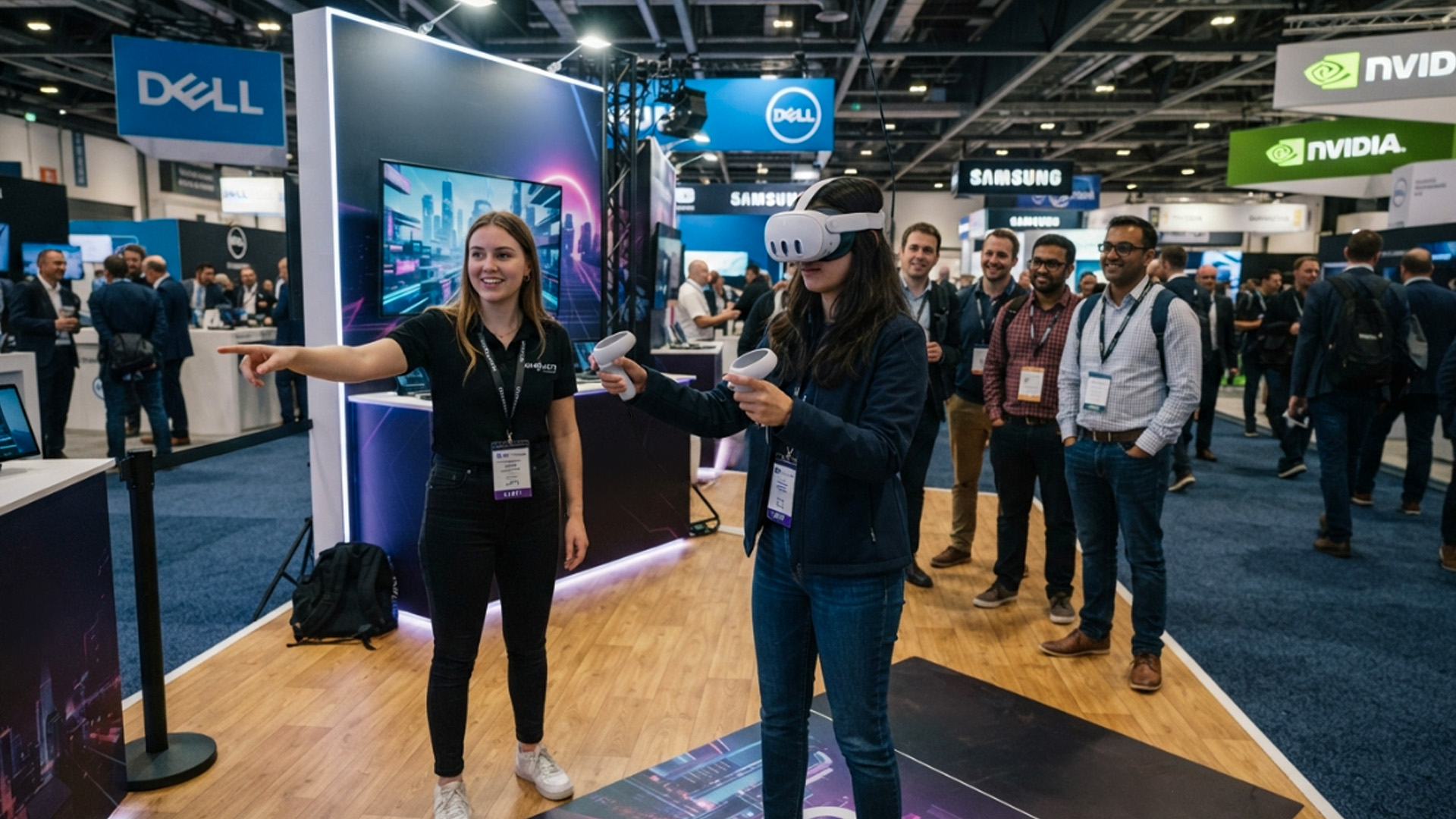
Designing a VR Experience That Fits the Event
A successful VR event begins with the event objective, not the technology. Before choosing headsets, software or visual styles, organisers need to decide what they want attendees to understand, feel or do.
A product launch may need to create excitement around a new feature. A conference may need a practical way to demonstrate an industry challenge. A public activation may need to introduce a brand to people who have never encountered it before. A training event may need to help participants practise a process before they use it in the real world.
Once the objective is clear, the VR experience can be designed around it. This makes the activity feel connected to the event rather than added as a separate attraction.
Short Experiences Usually Work Best
Event environments are different from home or office environments. People are standing, moving between sessions, meeting colleagues and managing limited time. A long VR experience may be impressive, but it can create queues and make it difficult for staff to guide attendees through the activity.
Shorter experiences are often more effective. They are easier to explain, easier to reset and easier to repeat for a larger number of people. A visitor can complete the experience, remove the headset and immediately speak to a staff member while their reaction is still fresh.
The content should have a clear beginning, middle and end. Attendees need to know what they are about to experience, what they should do inside the virtual environment and what the experience is meant to show them. Clear guidance makes the activity feel welcoming, especially for people using VR for the first time.
Build the Experience Around the Audience
A VR experience for a technology conference will not necessarily suit a family festival, retail launch or corporate leadership event. The audience’s age, confidence with technology, available time and reason for attending should shape the design.
For a public event, the experience may need simple controls and an immediate visual impact. For an industry audience, it may need more detail and a stronger connection to real-world applications. For a corporate audience, it may need to support a specific learning or communication goal.
The best event experiences respect the attendee’s time. They do not require complicated instructions or long onboarding. They give people a clear reason to participate and make it easy for them to understand what they are seeing.
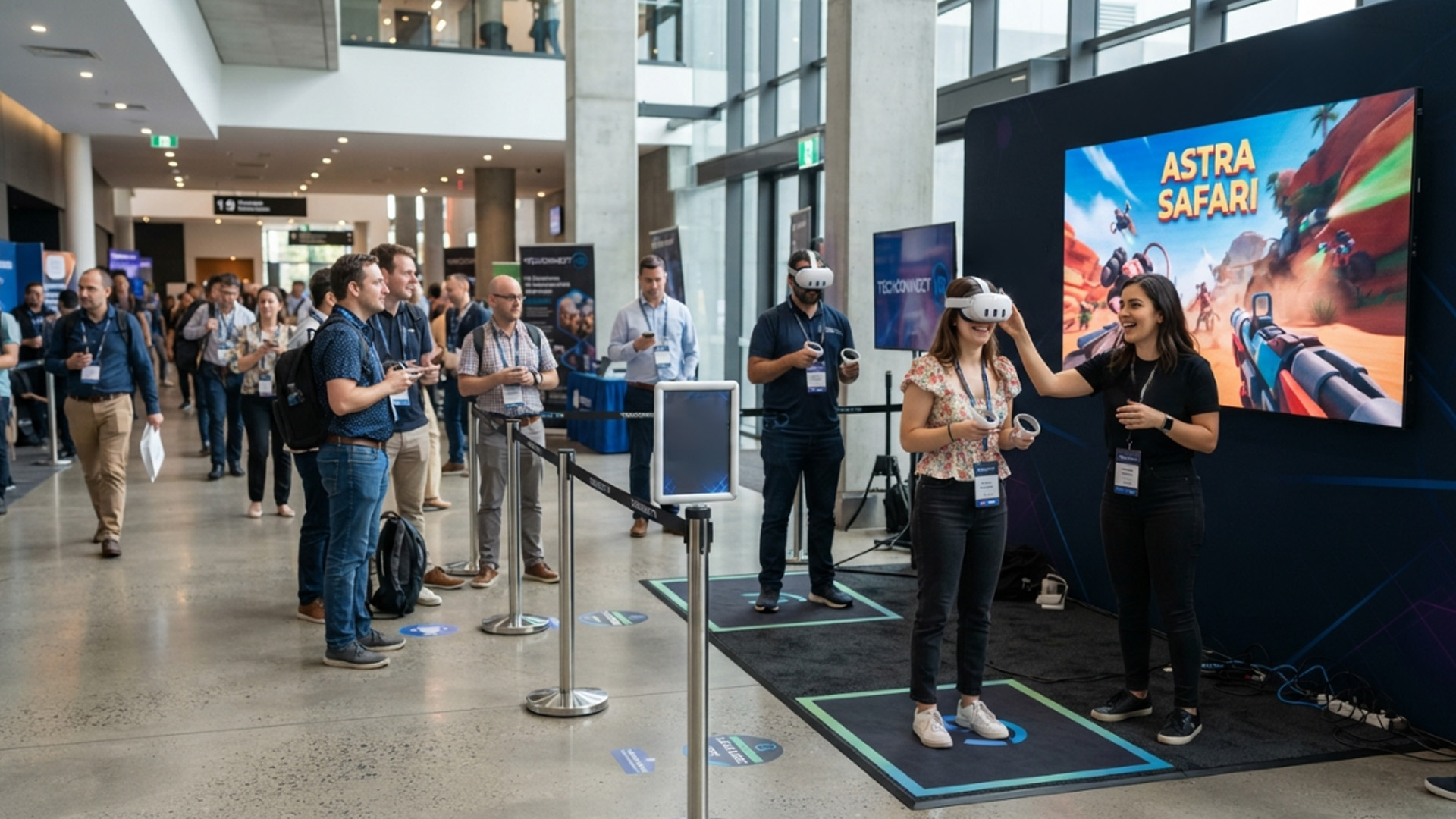
VR Can Bring Products, Places and Ideas to Life
One of the strongest reasons to use VR at an event is that it can make something difficult to display feel real. Some products are too large, too expensive, too technical or too far away to bring into a venue. Some locations cannot be visited during a short event. Some stories need more than a screen to make an impact.
Virtual reality gives organisers a way to bring those experiences to the audience. A visitor can walk through a future property development, explore the inside of a vehicle, stand on a factory floor or take part in a virtual tour of a destination.
This can be especially useful for industries where physical scale matters. Architecture, property, automotive, tourism, manufacturing, education and construction can all use VR to show people what a project, product or place will feel like.
Product Launches Beyond the Exhibition Stand
A product launch is often limited by the size of the venue and the number of items that can be displayed. VR can expand that space. A brand can show different product variations, demonstrate hidden features or place the user inside a scenario where the product is being used.
For example, a construction equipment company could show how machinery performs on a real worksite. A car brand could allow visitors to explore an interior, compare models or experience a route that supports the campaign message. A property company could take potential buyers through a future apartment before the building is complete.
The goal is not to replace the physical product where it is available. Physical interaction remains valuable. VR can add context, scale and storytelling that a static display cannot provide on its own.
Virtual Tours for Tourism and Destination Events
Tourism events are another strong fit for VR. A travel brochure can inspire interest, but a virtual experience can help people feel the atmosphere of a destination. Visitors can stand at a viewpoint, walk through accommodation, explore a cultural site or see what an activity might involve.
This can help travel brands start a more meaningful conversation. Rather than asking visitors to imagine a destination, staff can speak to them after they have already experienced a small part of it. The discussion can then focus on what interested them, what type of trip they want and how the real visit could be planned.
A good tourism VR experience should be honest as well as inspiring. It should show the real character of a place and give people useful context rather than presenting a generic virtual world.
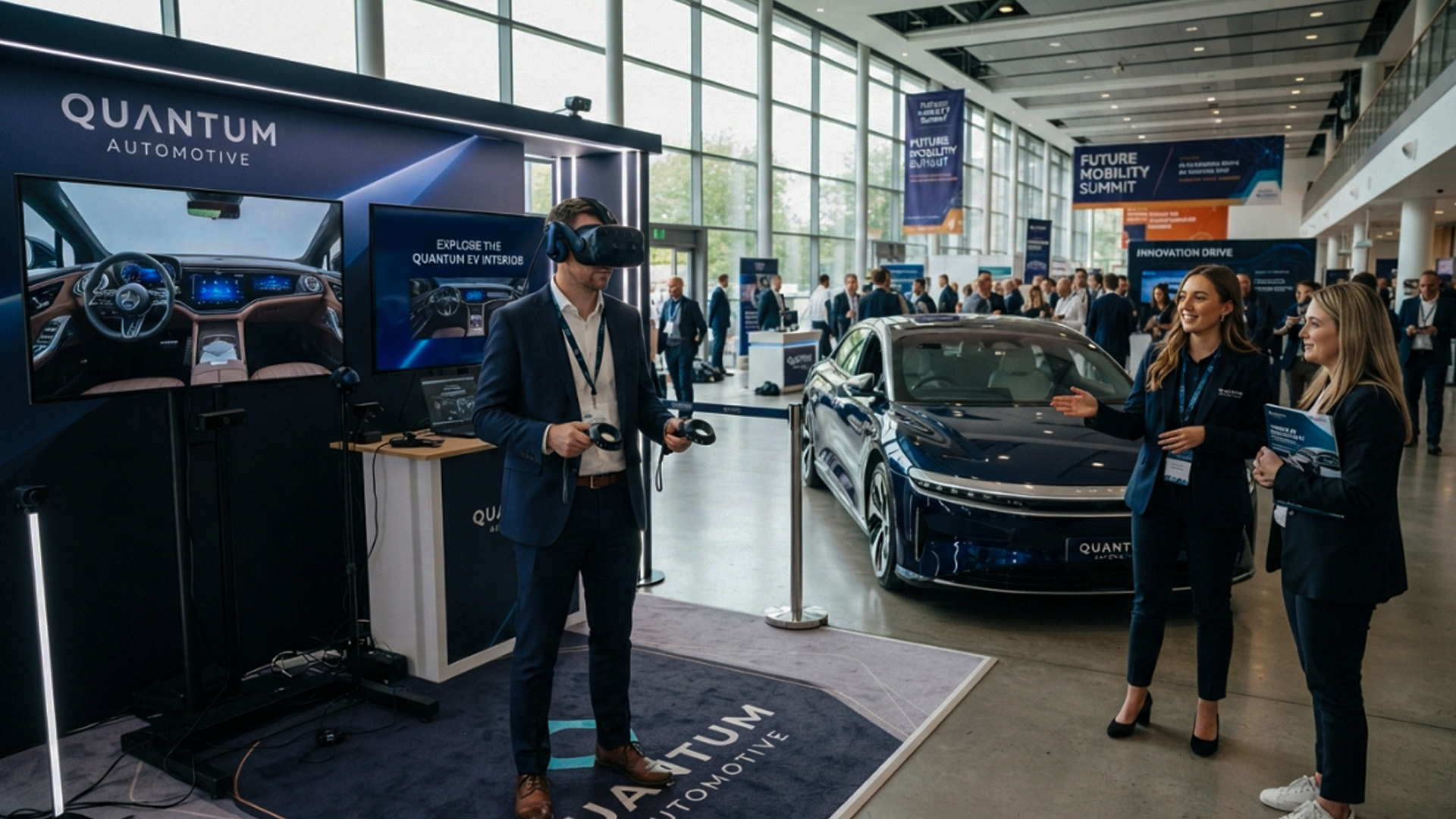
The Event Team Matters as Much as the Technology
A VR activation can have excellent content and modern equipment, but it will still struggle if the event team is not prepared. Attendees need to feel welcomed, guided and safe. Staff need to know how to explain the experience, fit the headset correctly, manage hygiene and respond when someone needs help.
The human side of the activation is what turns a VR demo into an event experience. A friendly host can explain what is happening, help a first-time user feel comfortable and start a useful conversation after the headset comes off.
This is particularly important at busy events where many attendees may be trying VR for the first time. Clear instructions and calm support can make the difference between a memorable experience and a frustrating one.
Managing Queues and Throughput
Queue management is one of the most important practical considerations. If an experience takes too long to set up, if headsets need frequent troubleshooting or if the activity has no clear end point, the queue can grow quickly.
Event teams can reduce this problem by using short content, preparing headsets in advance and giving people information while they wait. A screen can show a preview of the experience, explain the story or introduce the product. Staff can also ask visitors simple questions before their turn, helping the follow-up conversation begin naturally.
A well-managed queue can become part of the activation rather than a problem. People waiting should still feel involved and should understand why the experience is worth their time.
Comfort, Hygiene and Accessibility
VR events need to be designed for a wide range of people. Some attendees may be unfamiliar with headsets, some may prefer seated experiences and some may not be able to use VR comfortably at all.
Comfort should be planned from the start. Experiences should avoid unnecessary movement, provide a clear way to pause and allow users to remove the headset easily. Seated options can work well for many public events, especially when the activity involves 360-degree video or guided storytelling.
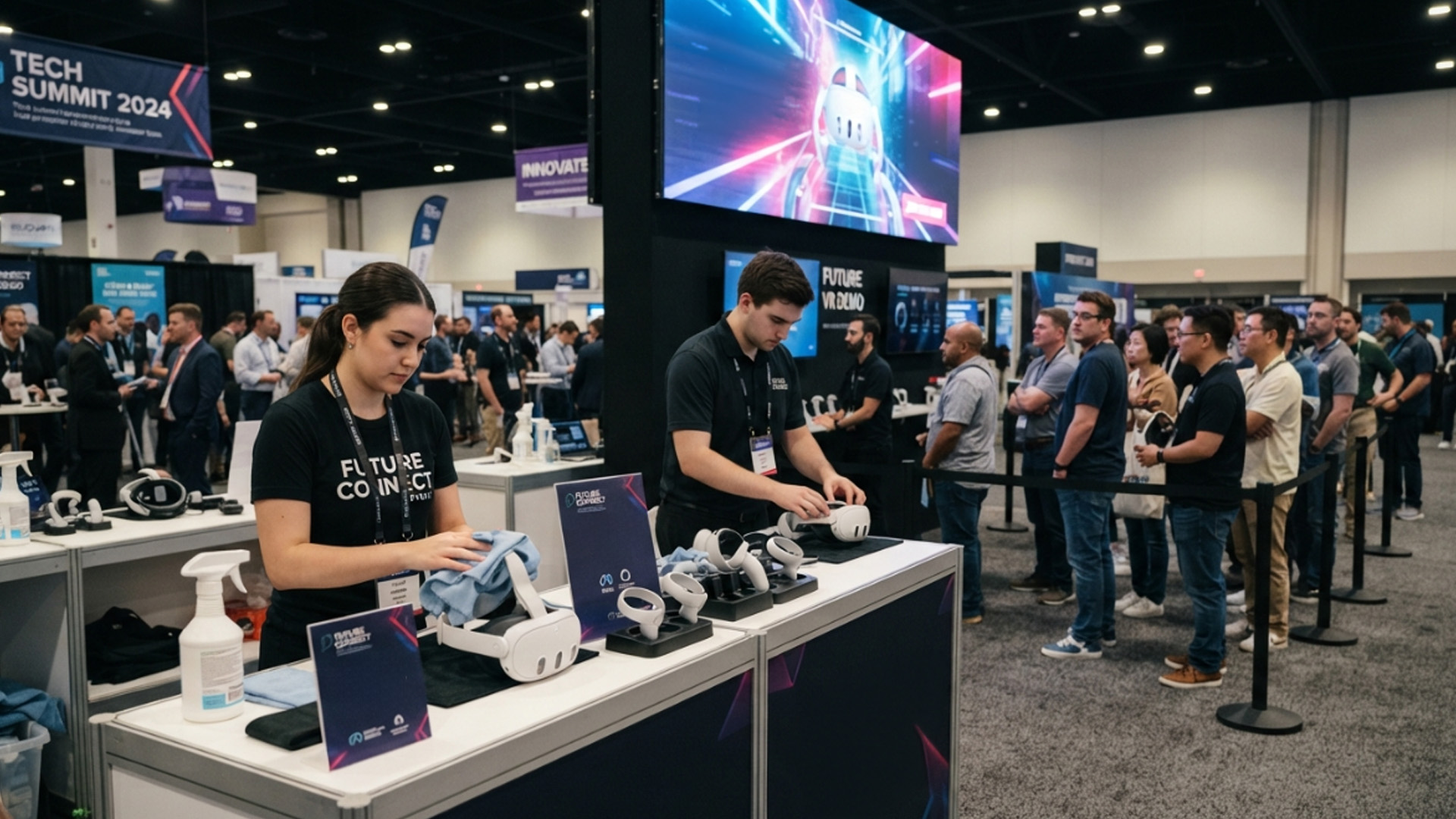
Hygiene is also important when equipment is shared. Event teams should use suitable cleaning processes between users and make visitors feel confident that the equipment is being looked after properly. Screen-based alternatives should be available so that people who do not use a headset can still take part in the story.
Measuring the Value of a Virtual Reality Event
A VR activation should be evaluated in the same way as other event activity. The goal is not simply to count how many people used a headset. Organisers should look at whether the experience helped create the outcome they wanted.
For a brand activation, that may include lead capture, product conversations, social sharing or purchase interest. For a training event, it may include knowledge retention, confidence or practical performance afterwards. For a tourism event, it may include enquiries, bookings or time spent speaking with a travel advisor.
The most useful measures are connected to the original objective. If the purpose was to help visitors understand a complex product, the team can ask whether people left with a clearer understanding. If the purpose was to create a memorable launch moment, the team can review reactions, content sharing and follow-up engagement.
Extending the Experience Beyond the Venue
The event does not need to be the only place where people can access the content. A 360-degree version can be placed on a website, used in follow-up emails or shared with people who could not attend. This gives the content a longer life and allows the brand to continue the conversation after the event has ended.
The physical event can remain the most immersive version of the experience, especially when it includes headsets, staff guidance and a designed environment. However, a screen-based version can help reach a wider audience and support future marketing activity.
In 2026, VR events are becoming more successful because they are being designed around people rather than novelty. The best experiences give attendees a clear reason to step in, a story worth exploring and a useful connection to the brand, product or idea waiting outside the headset.
Author: Elisha Roodt
Virtual Reality Events is South Africa's leading immersive event provider, bringing interactive virtual reality experiences, high-end hardware rentals, and custom software builds to corporate activations nationwide. Learn more at virtualrealityevents.co.za.